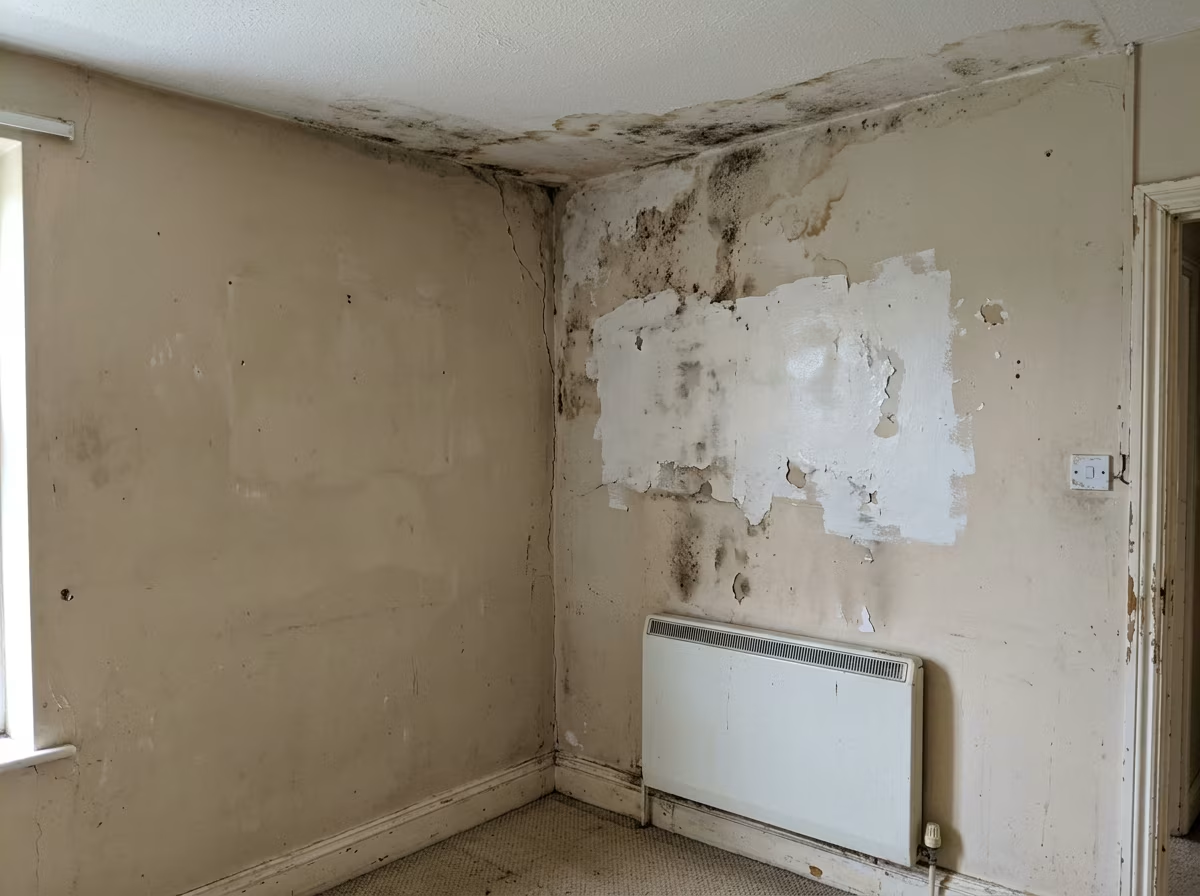
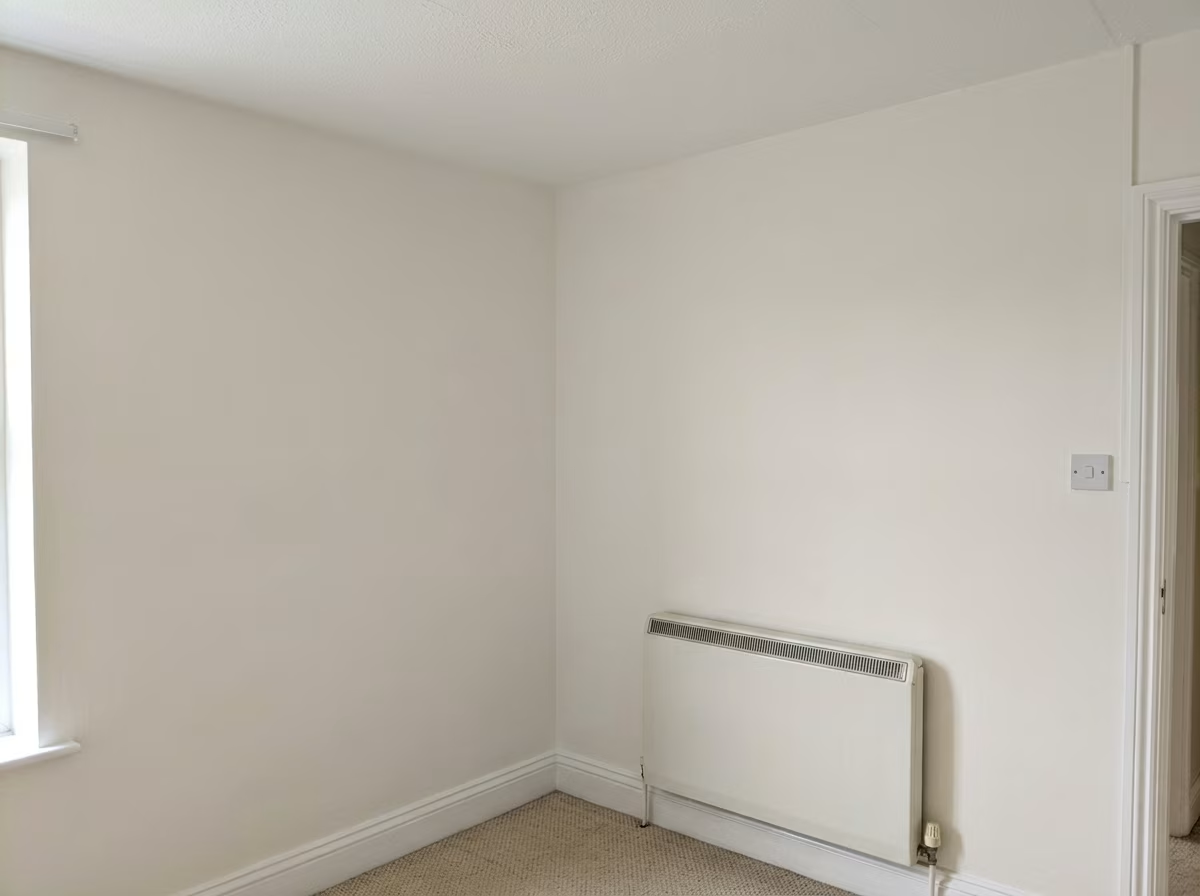
Professional diagnosis and treatment of every type of surface discoloration in rental properties — from water stains and mould to rust, efflorescence, and smoke damage. Treated at the source, documented, and gone.
Get a Free AssessmentWhy Treatment Beats Paint
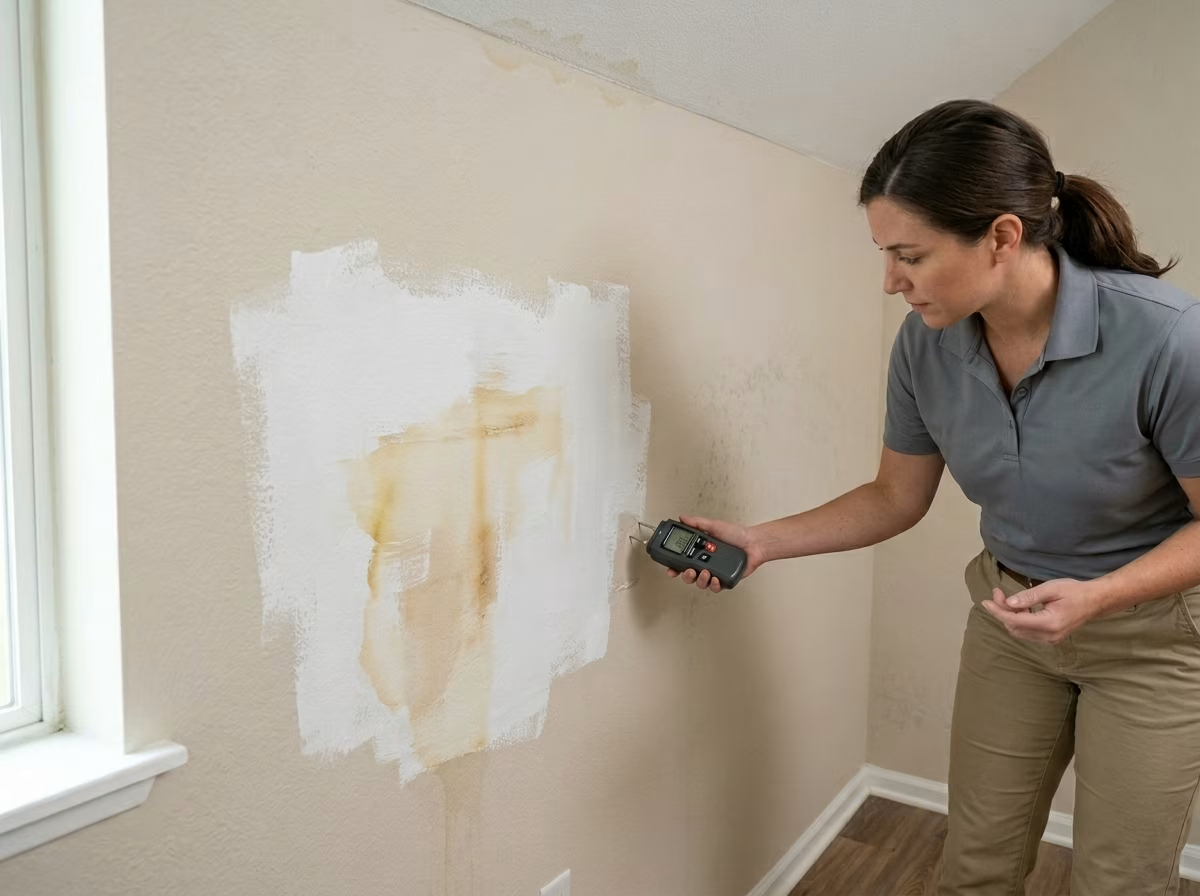
The most common mistake property owners make when confronted with discoloration — whether it's a water ring on a ceiling, mould creeping up a bathroom wall, or nicotine yellowing every surface in a unit — is to reach for a can of paint. Painting over stains without treating the source doesn't solve anything. It conceals the symptom while the underlying cause continues to develop, often invisibly, until the damage is far more extensive and costly to remediate.
Every discoloration in a property has a cause. Water stains indicate a moisture intrusion pathway. Mould signals humidity or condensation problems. Rust stains point to plumbing issues or corroding fixtures. Efflorescence on concrete or masonry reveals groundwater migration through the substrate. Without identifying and addressing the source, no surface treatment will last — the discoloration will return, often worse and faster than before.
Propservia's discoloration treatment service starts with diagnosis. We identify the source, address it where possible or recommend trade-specific remediation where needed, and then apply the correct treatment protocol for each stain type — producing a clean, documented result that holds through the next tenancy and beyond.
Types We Treat
Different discolorations require fundamentally different treatment protocols. What works on a water stain can set a mould stain. What neutralises efflorescence will damage painted drywall. We match the treatment to the stain type — every time.
The brown halos left behind by roof leaks, condensation, or plumbing failures — on ceilings, walls, and floors. We treat the substrate with stain-blocking primer and identify the moisture source to prevent recurrence.
Cause: moisture intrusion, plumbing leaks, or condensationBlack, green, or white biological growth on grout lines, ceiling corners, bathroom walls, and behind furniture. Treated with EPA-registered biocidal agents, physically removed, and HEPA-filtered — not painted over.
Cause: elevated humidity, condensation, or water infiltrationOrange-brown staining from corroding pipes, fixtures, water heaters, or metallic items left on surfaces. Treated with oxalic acid-based compounds that chelate the iron without damaging the surrounding substrate.
Cause: corroding plumbing, fixtures, or high-iron water supplyYellow-brown discoloration and odour penetration across all surfaces in units occupied by smokers. Requires a full surface wash with TSP or alkaline cleaners, sealing with shellac-based primer, and repainting — not just repainting alone.
Cause: tobacco smoke, fire events, or cooking residueWhite crystalline salt deposits on concrete, brick, masonry, and basement walls — caused by water dissolving salts in the substrate and depositing them on the surface as it evaporates. Treated with acid-wash and sealed against reoccurrence.
Cause: groundwater migration through porous masonryGreen, grey, or black biological growth on exterior masonry, siding, concrete, and shaded surfaces. Treated with biocidal wash, pressure cleaning, and long-acting anti-growth sealants that prevent rapid recolonisation.
Cause: shade, moisture, and organic matter on exterior surfacesBrown or yellowish bleed-through from cedar, pine, or OSB substrates — particularly visible through lighter paint colours. Treated with shellac-based blocking primer to permanently seal the tannin migration before finishing.
Cause: tannin-rich wood species bleeding through primer or paintWhite, chalky, or scaly deposits on bathroom tiles, glass, fixtures, and grout — caused by mineral-laden water evaporating and leaving calcium and magnesium behind. Treated with descaling agents matched to the surface type.
Cause: hard water supply with elevated calcium and mineral contentBlack carbon and protein deposits from kitchen fires, candles, or structural fire events — chemically bonded to surfaces and resistant to standard cleaning. Treated with dry sponge, chemical sponge, and alkaline detergent protocols before sealing.
Cause: fire events, cooking smoke, or candle soot accumulationMould visible on interior surfaces is rarely confined to those surfaces. If the moisture source is not identified and eliminated, mould will return within weeks of any surface treatment. Propservia's mould discoloration service always includes a moisture source assessment — and when structural remediation is required, our team coordinates the full repair scope rather than leaving you to manage it separately.
Results
Every Propservia discoloration treatment is photo-documented at assessment and on completion — giving you a clear before-and-after record for your property files, lease documentation, and insurance records.
Coverage Reference
Treatment methods vary significantly by surface type. Applying the wrong product or technique causes additional damage. Propservia matches the protocol to the surface and the stain — every time.
| Surface Type | Common Discolorations | Propservia Treats |
|---|---|---|
| Drywall & plaster walls | Water stains, mould, nicotine, tannin bleed | ✓ Full treatment |
| Ceilings (painted) | Water rings, mould, smoke residue | ✓ Full treatment |
| Bathroom tile & grout | Mould, mildew, hard water, soap scum | ✓ Full treatment |
| Concrete & masonry | Efflorescence, algae, rust, bio-growth | ✓ Full treatment |
| Exterior siding & cladding | Algae, lichen, mould, oxidation | ✓ Full treatment |
| Wood floors & subfloor | Water stains, pet urine, mould | ✓ Full treatment |
| Window sills & casings | Mould, condensation staining, paint peel | ✓ Full treatment |
| Glass & mirrors | Hard water deposits, soap film | ✓ Full treatment |
| Basement walls | Efflorescence, mould, moisture staining | ✓ Full treatment |
Our Process
Discoloration treatment done correctly follows a strict sequence — because skipping diagnosis means the treatment will fail, and the stain will return.
Every discolored surface is photographed and assessed — type, extent, and likely source documented before anything is touched.
The underlying cause is identified — moisture intrusion, biological growth, plumbing issue, or tenant-related damage — before treatment is selected.
Where within scope, the source is addressed. Where a specialist trade is needed, Propservia coordinates the referral or full repair.
The correct treatment agent and method for each stain type and surface is applied — no generic bleach approach for complex discolorations.
Appropriate sealers or blocking primers applied where needed, and before-and-after photos delivered with your completion report.
The Business Case
Stains and discoloration are among the most visible defects a prospective tenant notices during a showing — and one of the most reliable predictors of a rejected application or a lowball rent offer.
Visible mould, staining, and discoloration are consistently ranked among the top reasons prospective tenants decline to apply for a unit — ahead of layout and storage concerns.
Mould and moisture discoloration left untreated for one additional season typically requires remediation three times more extensive and expensive than early intervention.
Units with no visible staining or discoloration achieve measurably higher rents in competitive markets — a direct return on professional discoloration treatment.
What You Actually Get
Every Propservia discoloration treatment is performed by technicians who understand the chemistry of each stain type and the structural context behind it.
Every discoloration assessment starts with cause identification — so treatment is targeted and lasting, not cosmetic and temporary.
Water stains, mould, smoke, rust, and efflorescence each require different agents and methods. We apply the correct one for every surface and stain combination.
Biological discolorations are treated with registered biocidal agents — not bleach — for effective elimination and longer-lasting results.
When the source requires plumbing, waterproofing, or structural work, Propservia coordinates the full repair — so the treatment isn't undone by an unresolved cause.
Full photographic records of every treated surface — essential for move-in records, tenant damage disputes, and insurance documentation.
Treatment scope and cost confirmed before work begins — no post-job surprises when additional stain layers or substrate damage are discovered on-site.
Who We Serve
Whether you're preparing a unit for a new tenant, managing a recurring mould problem, or dealing with damage left by an outgoing occupant, Propservia delivers the right treatment at the right scale.
Tackle discoloration properly between tenancies — with source identification, correct treatment, and documentation that protects you against tenant damage disputes.
Maintain consistent surface quality across your managed portfolio — with a single treatment partner who handles diagnosis, treatment, and documentation for every unit.
Clear visible discoloration and document a clean surface condition during renovation — improving listing photography, tenant confidence, and perceived property quality.